Frequently Asked Questions
Discover answers to your questions about the natural way to honor a life.
If you have additional questions, our team is here to help.
memorial trees
What happens if my Memorial Tree dies?
The forest cycle of life and death are interconnected. If your tree dies before any ashes have been spread, we’ll help transfer you to another tree free of charge. If your tree dies after ashes have been spread, your Memorial Marker(s) will remain, marking your special place in the forest ecosystem. We look at each tree on a case-by-case basis, and we seek to be minimally invasive while prioritizing forest health.
What happens in the event of a forest fire?
By selecting healthy forests and following forest management best practices, our team works to reduce the risk of fire damage and disease. If your tree is affected by a fire or other natural disaster, we’ll follow the same process as if your tree dies.
What can I expect during a visit to a Better Place Forests location?
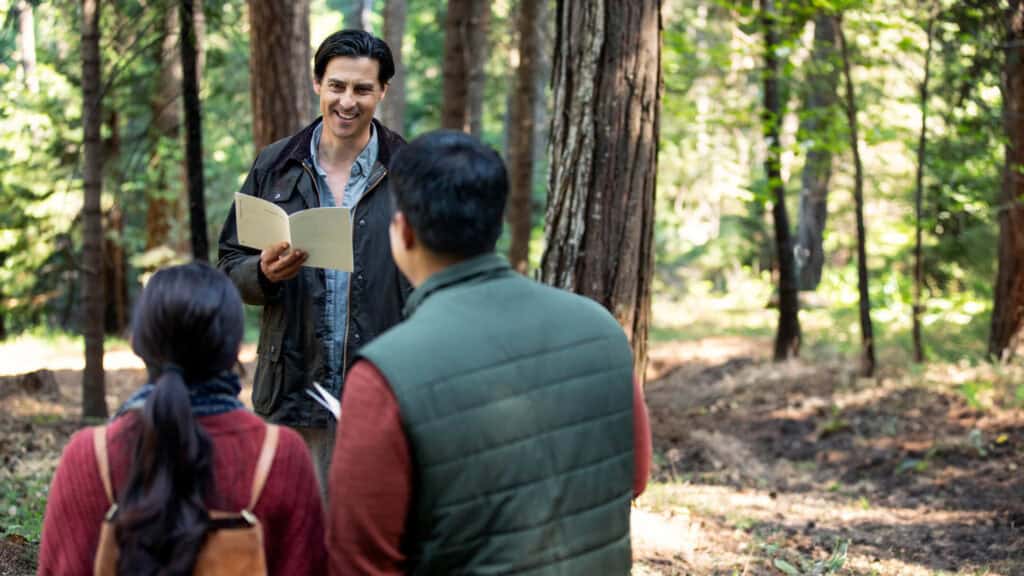
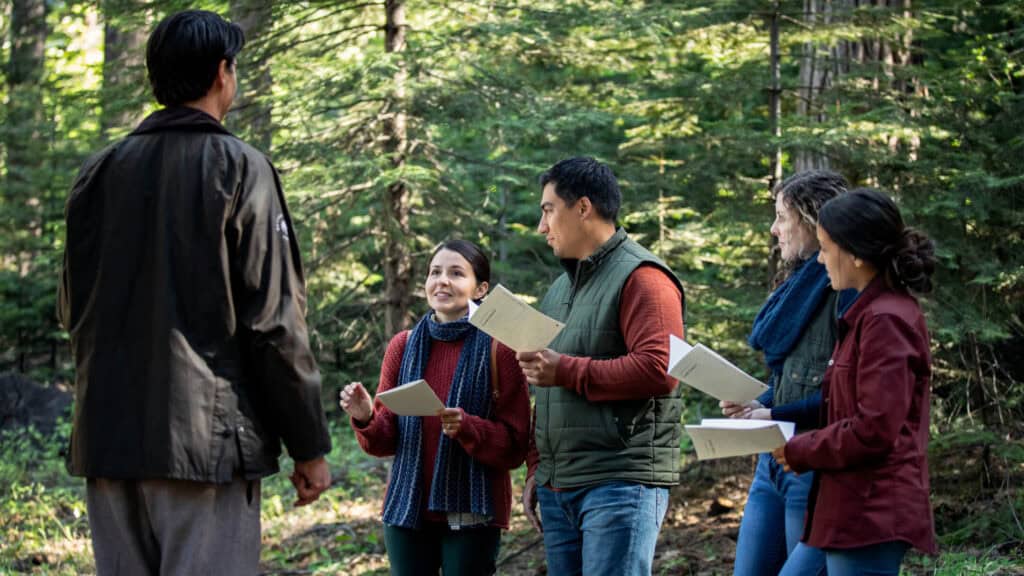
When you arrive in the forest, you’ll be greeted by a Forest Guide. Your Guide will answer your questions and take you on a walking tour of the forest. Typically tours last between 60-90 minutes.
All of our forests are equipped with accessible restroom facilities and light trail snacks for our visitors. In case of rain, there are umbrellas. In cases of extreme weather, we’ll ask that you reschedule your visit.
Our forest teams also have a motorized vehicle for visitors requiring mobility assistance. The mobility vehicle is an off-road vehicle that requires passengers to be able to climb up into the vehicle. Note: not all Memorial Trees will be directly accessible from the mobility vehicle.
Please reach out to our Customer Care team if you have further questions or need additional accommodations for your visit.
How are Better Place Forests locations protected?
Our process for protecting land begins by identifying and purchasing land with high conservation value. For us, conservation value means land that is in a natural, scenic, historical, agricultural, forested, or open-space condition. Often, the properties we consider are wildlife habitats and may face a threat of development or loss of these values.
Once we have purchased a property, we develop forest management plans and obtain local permits that provide for the preservation, protection, or enhancement of that conservation value. Then, we grant each customer an irrevocable license to access their Memorial Tree, and we record those licenses with local governments.
Finally, we establish Stewardship Trusts to fund the perpetual maintenance of our forests, and we seek conservation easements to permanently protect the land from development. This is a years-long, multi-step approach for each of our forests.
Do ashes impact the health of the tree?
We worked with soil scientists to create a process to safely place ashes in the forest so they won’t harm the forest. This also ensures that, as the bacteria in the soil naturally breaks down bone ashes over time, the ashes become bioavailable to the forest.
The chemical composition of ashes primarily includes phosphate, calcium, and potassium. While large concentrations of these minerals can indeed be harmful to the environment, Better Place Forests’ introduction of ashes mixed with native soil does not cause any significant impacts to the forest ecosystem.
memorial services
How do I schedule a Forest Memorial?
You can schedule a Forest Memorial by emailing forestmemorials@betterplaceforests.org or calling 415-854-0690.
Does Better Place Forests offer cremation?
Better Place Forests does not provide cremation services. You can find trusted partners by searching for local funeral homes or crematorium or emailing us.
about us
What are Better Place Forests?
Better Place Forests’ properties are protected forests that serve as a natural alternative to cemeteries.
Our protected forests are home to Memorial Trees. A Memorial Tree is an established, growing tree that serves as a resting place for cremated remains. Ashes are mixed with soil and spread at the base of the tree, becoming forever part of the forest.
Does Better Place Forests own the land? How do you choose a forest?
Yes, Better Place Forests owns all properties.
Our process for selecting land to protect begins by identifying land with high conservation value. For us, conservation value means land is scenic, in good health, is biodiverse, serves as a wildlife habitat, and may have cultural or historical significance.
We choose land with high conservation value that has safe access and sufficient and appropriate trees for our customers.
Where are the forests located?
What is a nonprofit?
A nonprofit is an organization that exists to serve a mission rather than generate profits for owners or shareholders. As a nonprofit, Better Place Forests will no longer have shareholders. Nonprofits reinvest their proceeds to support and sustain their programs—in our case, the forests.
Can I make a donation?
We are still in the process of obtaining our tax-exempt status. As soon as that process is complete, we can accept donations.